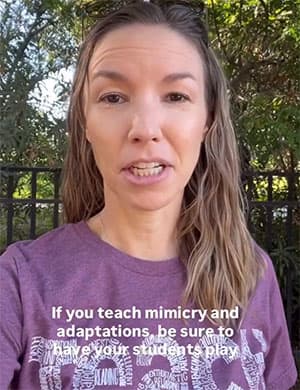
High school science teacher @ScienceLessonsThatRock is inspiring fellow educators with creative ways to bring science to life. In her latest post, she highlights our Research Quest Investigation on adaptations like mimicry—a perfect example of how curiosity and classroom exploration can go hand in hand. Check out her posts on Instagram and Facebook for ideas you can use with your own students!
Are you sharing Research Quest on social media—or planning to?
If so, we’d love to see it! Tag us (@nhmu) or send us links to your social media posts so we can like, comment, and help amplify your work across our channels. Sharing your classroom moments helps grow the Research Quest community and inspire other educators.
Need a few tips, post ideas, or want to brainstorm together before you share? We’re here for that too—reach out anytime!
Tips & Tricks
Looking for ways to strengthen your students’ CER writing in science? This month’s Teacher Tip video talks about using Research Quest investigations to guide students in making strong, evidence-based claims.
“I have 7th-grade students who become more interested in researching, archaeology, and in the ancient people of their state. They connect later when they are able to see these things in museums and State parks.”
Mamie Kynaston, West Valley, Utah
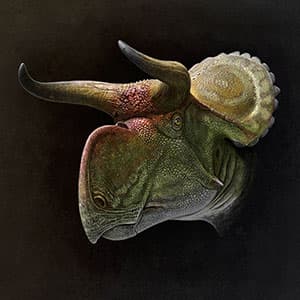 How did Triceratops evolve?
Bring the thrill of paleontology to your classroom with "How did Triceratops evolve?" This inquiry-based lesson challenges students to answer the question through five engaging levels. Using real paleontology data to analyze ceratopsian traits, phylogenetic trees, radiocarbon dating, and biogeography, students create presentations to share their findings like real scientists! Visit Research Quest to access the turn-key lesson plan and the support materials (including editable student notebooks and rubrics).
LEARN MORE HERE.
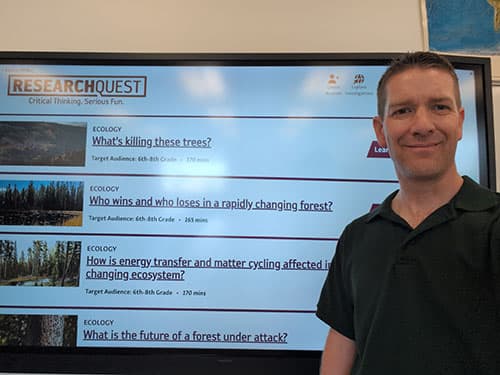
For Robert Sedgwick, a middle school science teacher at Spring Canyon Middle School in Springville, Utah, Research Quest has proven to be a powerful way to transform science learning. By putting students into the role of scientists, the program makes abstract concepts come alive through real-world investigations.
“Research Quest is a powerful program that helps students learn science concepts by doing science," Robert said. "Rather than just reading about scientific ideas or memorizing facts, students are invited to think and act like scientists—asking questions, gathering evidence, and forming conclusions.” (To read more, go here.)
“It's important to do the first investigation with the whole class to help students understand the expectations and how to use it. Typically, once they have done one whole class, they are ready to work in groups and/pairs, or individually.” Deb Smith, Salt Lake City, Utah

Research Quest is a program of the Natural History Museum of Utah in partnership with The Utah Education Network