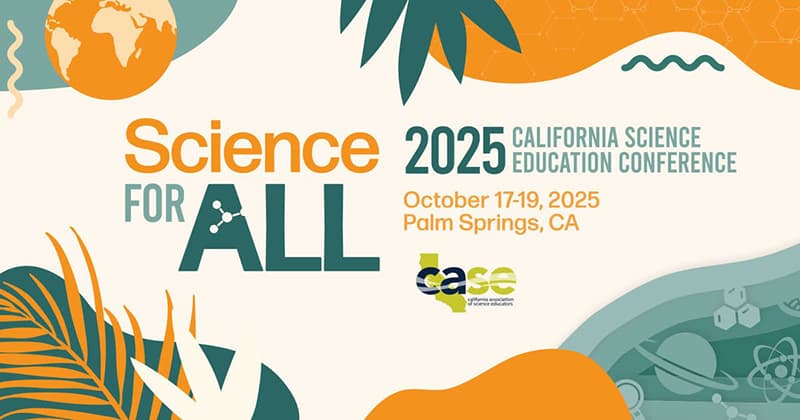
Catch us at the California Science Education Conference in sunny Palm Springs (Oct. 17–19) and then up north at the Washington Science Teachers Association Conference in Tacoma (Oct. 26)!
We’ll be leading hands-on workshops, sharing new ideas for your classroom, and hanging out in the Expo Hall. Come say hi and pick up some fresh inspiration (and some swag)!
Can’t make it to California or Washington? No worries—we’re packing our bags for Minneapolis (Nov. 13-15) for the National Science Teachers Association Conference! Hope to see you there for more hands-on science and great conversations.
“We did the two investigations-What happened at Cleveland-Lloyd Dinosaur Quarry? and What dinosaur did these bones come from? The kids loved being able to digitally manipulate the bones and see them from different angles-like they were holding them themselves. They are really curious as to why there were so many allosaurus bones-which led to more research on their own. Some parents are planning a trip to Cleveland-Lloyd to go see what their kids were talking about.””
Kathy Pretell, West Jordan, Utah
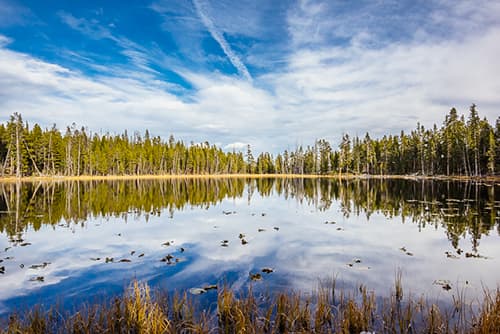 What's killing these trees?
Help your students think — and work — like scientists! In this investigation, they collect and analyze their own data to uncover what’s driving Lodgepole Pine die-offs in Utah’s Uinta Mountains. Along the way, they build powerful data literacy skills: noticing patterns, interpreting results, and reasoning with evidence.
These habits of mind pay off across the school year, strengthening students’ ability to make sense of information in any science unit.
Not in Utah? Not a problem. The investigation connects to forests everywhere, from local woodlands to global ecosystems facing similar climate and biodiversity challenges.
Quick Tip: Have students compare their findings to tree health data or environmental trends closer to home — it’s a great way to connect local relevance with global understanding.
LEARN MORE HERE.
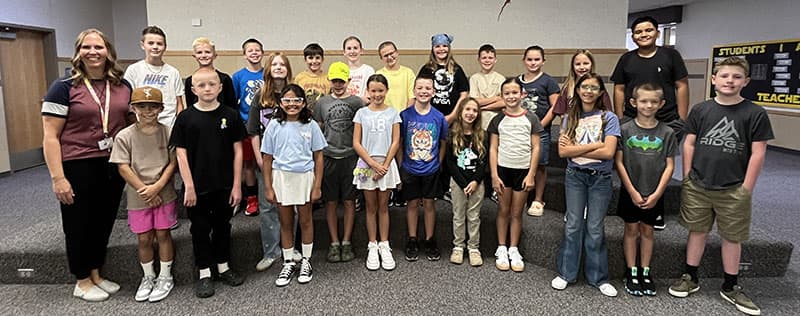
For Lisa Jensen, a teacher at Blackridge Elementary in Jordan School District, Research Quest has been a highly interactive and collaborative way to enhance her classroom learning.
“Research Quest was a great, interactive, collaborative program," she said, "that helped solidify the concepts that I taught in class. Students were given a phenomenon and problems in the Uinta Mountains (that made the connection real because that is our backyard), and they had to work together in order to make sure they could help the ecosystem thrive.”
Lisa used the “How is energy transfer and matter cycling affected in a changing ecosystem?” Investigation to help students explore how ecosystems respond to environmental change. The real-world setting of the Uinta Mountains made the lesson feel close to home, helping students connect what they learned in class to the environment around them. (To read more, please go here.)
“Have the students work with a learning partner. Provide hands-on experience (playdough, using a metate, etc) to supplement what they are learning in the online version.” Rachel Cardoza, American Fork , Utah

Research Quest is a program of the Natural History Museum of Utah in partnership with The Utah Education Network