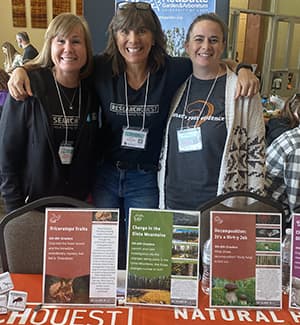
 We had a fantastic time at this month’s Utah Science Teachers Association Conference! It was energizing to connect with so many passionate educators, lead engaging workshops, and hear how you're using Research Quest in your classrooms. Your insights and enthusiasm are what keep this work exciting!
Looking ahead, we’re thrilled to be heading to more great conferences this fall. If you’re attending any of the following, be sure to stop by our exhibit booth or join one of our workshops—we’d love to connect with you!
California Association of Science Educators (CASE) – Palm Springs - October 17-19th
Washington Science Teachers Association (WSTA) – Tacoma - October 25th
National Science Teaching Association (NSTA) – Minneapolis - November 12-15th
See you there—and here’s to a school year full of inquiry, discovery, and great science!
Not only does Research Quest build critical thinking, collaboration, and data sense in your students, it can also provide some wonderful professional development for you as a teacher! The Investigating Artifacts Investigation models for teachers "just in time" information for teachers and how it can successfully scaffold student learning. Check it out today!
TO LEARN MORE, WATCH THIS BRIEF VIDEO.
“I loved how the initial investigation let students think one thing and then as they progressed through the activities they came to a realization that it was something else.”
Robert Sedwick, Springville, Utah
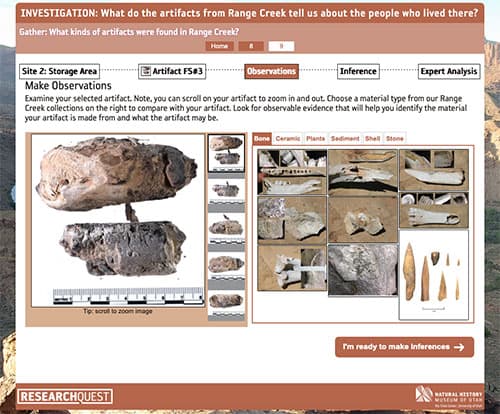 Range Creek
This investigation supports students take on the role of archaeologists, deciding which artifacts to study and gathering real data from a remarkable site in Utah. As students explore the artifacts left behind by the Fremont people, they build their own evidenced-based interpretations of the past—strengthening data literacy and reasoning skills in the process.
Along the way, they learn from a diverse team of scientists who model how experts approach big questions about human history, culture, and evidence.
Empower your students to think like scientists—start the investigation today!
LEARN MORE HERE.
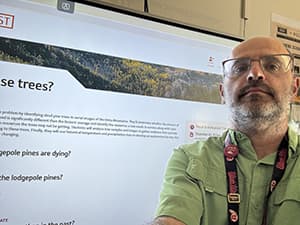 In the ever-evolving landscape of science education, finding resources that engage and deepen students’ understanding is essential. Yevgeny Pevzner, a 7th grade science teacher at Kearns Junior High, is a passionate educator who believes science should be an active process of discovery.
Dedicated to fostering curiosity and critical thinking, Yevgeny uses Research Quest to create hands-on learning experiences that allow students to approach science like true investigators. Yevgeny highlights What’s Killing These Trees? as one of the most effective activities in Research Quest.
In an age where students are surrounded by technology, it can be difficult to help them see how science applies to the real world. He describes it as, “Overall, What’s Killing These Trees? is a great example of how Research Quest lessons are easy, fun, and interactive while still building important skills. It helps students see that science is about curiosity, asking questions, and using evidence to discover answers.”
Research Quest has become an invaluable asset in his classroom, using investigations as an extension to his lessons. (To read more, please go here.)
“I typically walk through the first portion of the first section with my students. This way I can point out clickable items and they can get the hang of navigation.” Brittany Harper, Jasper, Missouri

Research Quest is a program of the Natural History Museum of Utah in partnership with The Utah Education Network