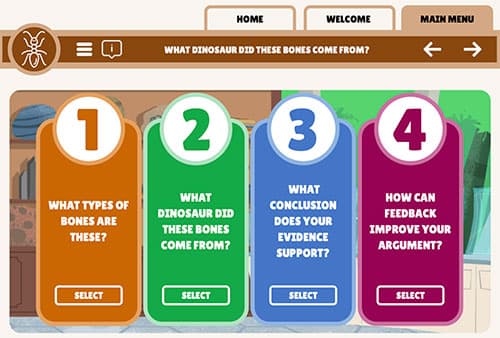
Since it was launched 10 years ago, many educators have shared helpful feedback about how they use What dinosaur did these bones come from? in their classrooms. Based on that input, we’ve created an updated layout focused on improving flow, pacing, and learner scaffolding—while keeping the investigation itself the same.
We’re inviting teachers to try this version with students between April 1–May 15 and share brief feedback through a short survey.
We’re grateful for your time and insights—your perspective directly shapes this work. Sign-up here!
Teaching Tip
Looking for quick ways to see what your students are really thinking while they investigate? In this month’s 90-second Teaching Tip video, we spotlight how Research Assistant Notebooks and other parts of Research Quest investigations can double as powerful formative assessment tools—without adding more to your plate. Click to see how small moves can give you big insight.
"My 6th grade class thoroughly enjoyed the investigation we did. They had fun, it challenged their critical thinking skills, and it increased their collaboration skills. We will use more investigations in the future!"
Lindsey Miller, Pleasant Grove, Utah
Why are fungus farming ants so good at surviving?
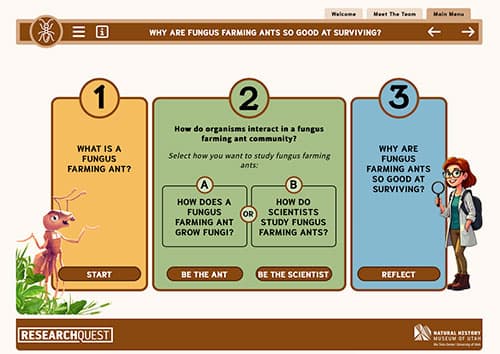
Our newest investigation, “Why Are Fungus-Farming Ants So Good at Surviving?" is specifically designed for third grade and is built around authentic, real-world data and digital tools. It takes students into the jungles of Central and South America to explore a 60-million-year-old survival story.
This Investigation is Different: More Digital Literacy, More Agency. Your students won't just read about science—they'll work, in this digital space, like real scientists:
Watch this 2-minute overview video to see how students can dive in and lead their own investigations.
LEARN MORE HERE.
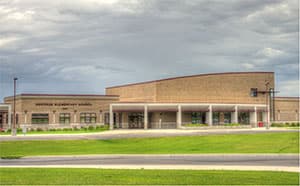
For Sharla York, a teacher at Heritage Elementary School in South Nibley, Utah, Research Quest has brought a fresh and engaging approach to science investigations in her classroom. By combining hands-on learning with collaboration and critical thinking, the program allows her students to experience science as active participants.
“Research Quest has been wonderful for providing a new and unique approach to investigating phenomena. My students worked collaboratively on the tasks, and they were required to communicate effectively in order to understand the material.” (To read more from Sharla go here.)
“Use the printed materials. Allow students to work with partners in flexible groups (pairs or trios). Talk about the concepts as a group. Get student feedback about what they experienced (debrief). Use feedback to get students ready for the next step for the investigation. Use the extension activities provided by Research Quest.” Bernadette Carnes, Philadelphia, Pennsylvania

Research Quest is a program of the Natural History Museum of Utah in partnership with The Utah Education Network